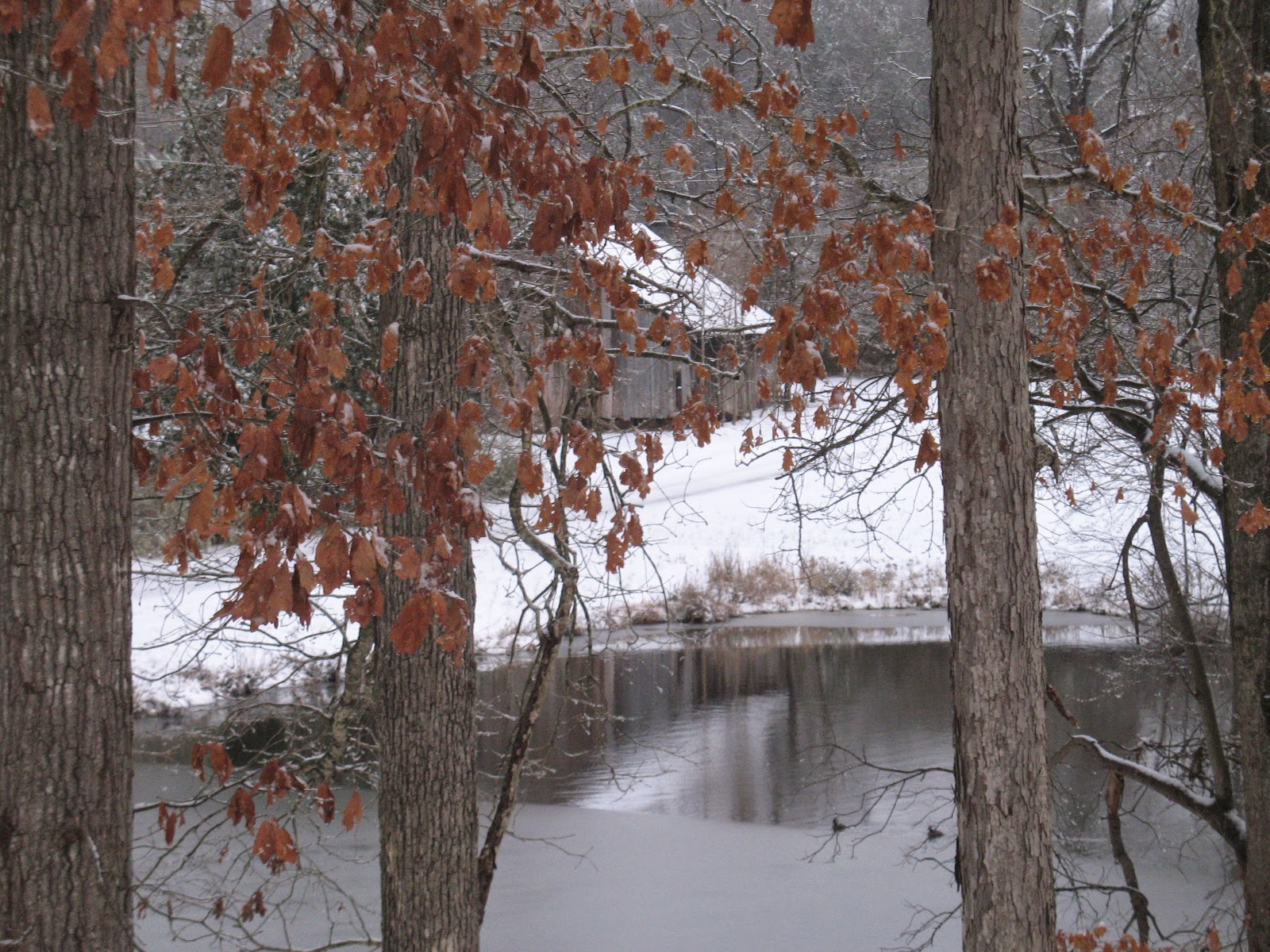
Yes, there is mud.
But, not the good kind, not the kind that we like to toss on the wheel. There is the slippery mud. The good old Carolina red mud.
When we get the out of state visitors in the store they will ask us if the red mud that they see everywhere is the same mud we make our pottery from.
The short answer is no.
That red clay that you see is good for one thing and one thing only, it likes to cake to the bottom of your shoes or tires and let you just "carry" it with you to the house or to the road. When bringing that wonderful Carolina red "mud" into the house it will then make its way into the rest of your life.
If you don't leave those shoes at the door, you can have Carolina red floors, rugs, furniture, just about everything it comes in contact with.
Do we make pottery from mud.
No, we make pottery from clay.
And, clay is not mud.
From Wikipedia:
Clay is a fine-grained natural rock or soil material that combines one or more
clay minerals with traces of metal oxides and organic matter. Clays are
plastic due to their water content and become hard, brittle and non–plastic upon drying or
firing. Geologic clay
deposits are mostly composed of
phyllosilicate minerals
containing variable amounts of water trapped in the mineral structure.
Depending on the content of the soil, clay can appear in various colors,
from white to dull gray or brown to a deep orange-red.
Yes, I know the real information is not interesting to all of the people that like to think we just dig up our back yards in order to make things. For the most part we do not dig up our yards, but if we could, would we?
There is a lot of work that goes into creating a good clay body. If you are one of those lucky folks that stumbles on a bed of clay that is perfect for throwing and firing you are a very lucky person indeed.
Most clays need something else added to make them work.
Mark and I use a high quality commercial blend, that works for us.
There are potters today who are experimenting with local or native clay in their areas.
We are of the mind that this is one of those steps that we don't want to do.
We also know many of the children of the older generation of potters. Many of those people had the job of digging and processing the clay for the family business. They use to tell me about how hard the work was and that they would rather eat off a paper plate. It made me laugh, still does.
At school we mix our clay.
I spend at least twice a week with the help of my work study student processing clay for the classes.
It is an interesting job. It has made me think about the clay I use at home and the clay I make at school.
I think it is good to have to at least learn how to mix a clay body, knowing what it needs to do, and learning about all the things that you want it to do.
Does it make me want to mix our own here?
No.
I'm too busy keeping that mud out of my house.
Spring is coming, it has to.